Most of disease biology lives where drugs can't reach. We engineered a platform that reaches it.
SCROLL
DUALYS·BIO
INITIALIZING…
Published in NatureFoundational programmable-protease science, 2023
Originated at CU BoulderBorn in an academic biochemistry lab
Growing networkAdvisory relationships forming across oncology
THE PROBLEM
Most of disease biology lives where drugs can't reach.
Transcription factors and other intracellular disease drivers have no enzymatic active site, no deep binding pocket, and are often intrinsically disordered, the exact features every existing drug modality depends on.
Modality
Why it falls short
Small molecules
No pocket to bind
Antibodies
Cannot access intracellular or nuclear targets
PROTACs
Require a ligandable handle
RNAi
Incomplete suppression
CRISPR
Delivery and safety challenges
THE PLATFORM
A programmable protease, in three parts.
01
An engineered catalytic core
Enzyme scaffolds adapted from naturally occurring biological defense systems, re-engineered into a general-purpose, programmable protease.
02
Sequence-specific recognition
Customizable recognition sequences give programmable specificity for a defined protein target, no active site or binding pocket required.
03
Directed proteolytic action
Sequence-guided cleavage functionally shuts down disease-driving proteins at the source, inside the living cell.
LEAD INDICATION
Relapsed/refractory Ewing sarcoma, the proof of concept.
Ewing sarcoma is defined almost entirely by one fusion oncoprotein, EWSR1::FLI1, tumor-exclusive, causally required, and never yet drugged directly. It is the clearest, highest-conviction test of whether direct intracellular protein modification works in patients.
85–90%
Fusion prevalence
Share of Ewing sarcoma defined by the EWSR1::FLI1 fusion oncoprotein.
~12 mo
Median survival after relapse
Outcomes after relapse remain dismal, with no approved therapy for the setting.
Zero
Approved targeted therapies
No drug has ever directly targeted the fusion protein that drives the disease.
PIPELINE & INDICATIONS
From Ewing sarcoma to a family of undrugged cancers.
The same platform approach extends naturally to other fusion-driven cancers that share EWS-FLI1's defining features: a tumor-exclusive fusion junction and no existing targeted therapy. A platform, not a single asset, retargeted to a new recognition sequence each time.
Program
Scope
Stage
Ewing sarcoma — EWSR1::FLI1
Direct cleavage of the tumor-exclusive fusion oncoprotein.
Lead / Proof of concept
Fusion-driven sarcomas
Alveolar rhabdomyosarcoma, synovial sarcoma, DSRCT, NUT carcinoma and related rare cancers.
Broad intracellular therapeutic platformA general approach to pocket-free disease drivers
Fusion-driven & undruggable expansionA family of rare, genetically defined cancers
Lead sarcoma indicationsEwing sarcoma first
THE SCIENCE
Rooted in bacterial antiviral defense biology.
Our platform is built on a naturally occurring bacterial immune mechanism, re-engineered into a general-purpose, programmable protease capable of sequence-specific proteolysis of essentially any protein of interest.
~20M
Global cancer cases / year
The total worldwide oncology burden addressed by new modalities.
15–20%
Driven by gene fusions
A large, genetically defined slice of cancers with tumor-exclusive drivers.
~1–2M
TF-fusion patients / year
Enriched in pediatric, rare, and aggressive, well-defined tumor types.
Foundational publication
Ledvina, Hannah E. et al. — Nature 616, 7956 (2023)
This peer-reviewed paper describes the underlying programmable-protease biology and its capacity for sequence-specific proteolysis, the scientific foundation of the Dualys Bio platform. Transcription-factor fusions targeted by the approach include EWSR1-FLI1 (Ewing sarcoma), PAX3-FOXO1 (alveolar rhabdomyosarcoma), and SS18-SSX (synovial sarcoma).
FOUNDERS
Built by operators and the scientists who invented the technology.
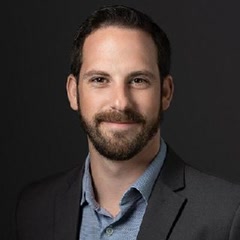
Andrew Zorn, Ph.D.
CEO & Co-Founder
Biotech founder and operator experienced in building platform- and asset-focused companies
Led therapeutic programs, pharma/CVC partnerships, and major non-dilutive funding efforts
Background in business strategy, business development, and venture creation
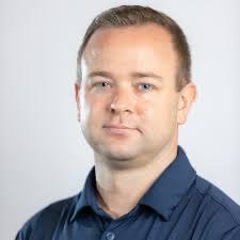
Scott McMenemy, Ph.D.
CSO & Co-Founder
15 years of business development leadership in biopharma
Specialist in creating, scaling, and commercializing R&D tools, biologics discovery platforms, and drug-discovery services
Track record in biologics, oncology, and cell therapy; led global strategic partnerships
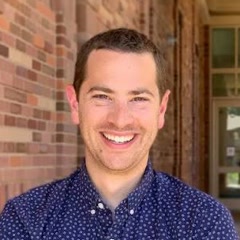
Aaron Whiteley, Ph.D.
Scientific Advisor & Co-Founder
Inventor of the platform's core programmable-protease technology
Assistant Professor of Biochemistry, University of Colorado Boulder
Recipient, NIH Director's New Innovator Award, and multiple early-career honors
PARTNERS & INVESTORS
Partner with Dualys Bio.
We're building the first pocket-independent, programmable protease platform for intracellular disease targets, and validating it in one of oncology's clearest, most underserved unmet needs. We're engaging investors, pharma, and research partners who want early visibility into the platform.
01Highest-confidence target class
Genetically fixed, tumor-exclusive, causally required drivers in rare solid oncology.
02A validated need, a vacated field
Every prior modality has failed on mechanism, not execution. The solution space is open.
03A platform, not a single asset
The same approach extends across a family of undrugged cancers and other intracellular targets.